domingo, 28 de abril de 2013

IMMOBILITY

The immobility is the decreased ability to perform activities of daily living impairment of motor functions.

The main systems affected are the cardiovascular system and musculoskeletal system. But they are not unique, they are also affected: the respiratory system, nervous system, digestive system, the genitourinary system, the endocrine system and skin.

In the cardiovascular system, what happens is that there is a decreased energy expenditure and therefore left ventricular distensibility.


In the musculoskeletal system, what happens is that muscle strength decreases.


The 18% of those over 65 have trouble getting around without assistance and from 75 years, over 50% have trouble leaving home, of which 20% are confined to their homes.


Numerous studies or regular daily exercise in elderly, has beneficial effects on diabetes, hypertension, falls, the level of independence, osteoporosis and blood cholesterol level, among other benefits.


We recommend aerobic, flexibility, strength and balance, adapted to the situation of each and their needs.

The immobility can lead to depressive disorders and social isolation.

The elderly who have more risk of immobility are the sedentary and frail elderly, as explained above.


I think that immobility in the elderly is a problem with epidemiology and rises as nurses have an obligation to act against this, trying to prevent it, supporting patients and their families. If we do means many patients end up bedridden shortly.

So the make a proper comprehensive geriatric assessment is the best way to detect the risk of immobility.


_________________________________________________________________________
Bibliography:


1. Torres Haba R, Nieto de Haro MD. Inmovilidad. Tratado de Geriatría para residentes. Madrid: Sociedad española de geriatría y gerontología. 211-216.



domingo, 21 de abril de 2013

SKIN INTEGRITY AND ULCERS

It called for pressure ulcer: "any area of damage to the skin and underlying tissue caused by prolonged pressure on a hard surface, not necessarily strong, and independent of the position".

According to WHO pressure sores "are an indicator of the quality of care techniques".

The pressure ulcers do not heal by themselves, must be the cause and implement adequate care.
The nursing staff should be able to identify ulcers, heal them, but above all to make a good prevention.

Pressure ulcers require time and effort, affecting mostly older people with limited mobility or who are bedridden.


The Braden Scale and Norton, are used to identify the risk of developing a pressure ulcer.


According to the AHCPR, based on original classification Byrne and Field, ulcers can have four stages.


The most common areas are pressure ulcers are:

It is also important to assess the area, the volume and the surrounding skin.


Some of the measures we must take to prevent are:


  1. Postural changes every two hours in bed.
  2. Avoid sitting in a chair too long, mobilize every hour. And do not place any cushion or anything that increases the pressure in the area.
  3. Place protections bony prominences, plus heel, elbow.
  4. Place a pillow or foam between your legs so you do not rub your knees and ankles.
  5. Raise your legs with a pillow or foam pressure not to make the bed heels.
  6. Use a decubitus mattress.
  7. Protein diet.
  8. Examine the skin daily. Wash and dry daily.
  9. Cotton clothes.
  10. Use of absorbents.
  11. Properly hydrate skin with cream.
  12. Apply skin barrier.
  13. Apply hyperoxygenated fatty acids to any redness and foam if required, dressing pad.


MACERATION

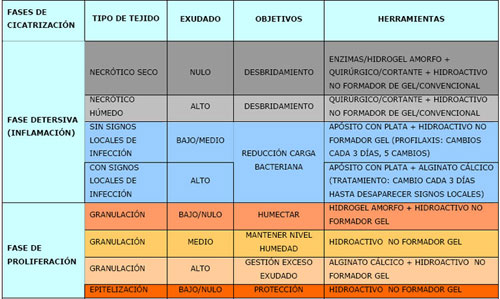
According to the study by Gago et all, maceration is the most common problem when using dressings based on moist wound healing. Occurs when the exudate is poorly controlled, which saturates the surrounding skin and cause pain, slowing the evolution of the wound, increasing its size.


It is important to know all the factors maceration triggers, and in this way to address it and prevent it.
We must also choose the dressing based on the cure humid environment regarding variables perilesional skin, as most appropriate considering the not aggressive or traumatic.
The dressings based on moist wound healing must maintain a proper balance for both premises as the absorption of exudate, the phase scarring.


I totally agree with the item, but not only must try to avoid maceration of ulcers, but able to apply our knowledge well as nurses to use dressings and appropriate treatment.


I leave this video on VAC therapy, and that I found very innovative and useful precisely to avoid maceration, among other things, not being the most important.
This video is now sponsored by KCI.


__________________________________________________________________________
Bibliografía:

1. Ayora Torres P, Carrillo Sánchez M, Donaire Guarnido MA, López Jiménez E, Romero Castro B, Ruz Ramírez J, Segarra Valls I, Turrado Muñoz MA, Zayas Navarro C, Rich Ruiz M. Protocolo de cuidados en úlceras por presión. Hospital Universitario Reina Sofía. Córdoba.


2. Correa Román L, Moreno Rojo M, Jiménez Vinuesa ND. Manual de procedimientos de medidas de prevención de Upp. Fundación Pública Residencia de Mayores San Luís. Motril. Granada.  Disponible en: http://www.gneaupp.es/app/adm/documentos-guias/archivos/51_pdf.pdf

3. Guía-Protocolo de Prevención, Tratamiento y Apósitos en Úlceras por Presión. Comisión de úlceras por presión del departamento15. Centros sociosanitarios-Primaria-Especializada. Disponible en: http://www.a14.san.gva.es/hos/enfer/prevencion%20upp%20guia%20de%20enferferia%20departamento%2015.pdf


4. Gago Fornells M, García González RF, Rueda López J, Muñoz Bueno AM, Vega Águilar J, Gaztelu Valdé V. La maceración. Un problema en la piel perilesional de úlceras por presión y heridas crónicas. Cádiz. 2004. Disponible en: http://www.gneaupp.es/app/adm/publicaciones/archivos/38_pdf.pdf


sábado, 6 de abril de 2013

GENERAL IN DISEASES OF THE ELDERLY

In the elderly are given many physiological changes due to aging. But not always as easy to detect these changes at first, which makes the diagnosis and treatment.

In elderly patients it is important to take into account in order to provide appropriate assistance:


Heterogeneity in over sixty-five years.

Peculiarities of disease.

Fragility.

Comorbidity and polypharmacy.

Tendency to chronicity.

Less favorable forecasts disease.

Increased use of health resources.

Diagnostic and therapeutic difficulties.

Increased need for rehabilitation.

Frequent need social resources

Common ethical problems.


GERIATRIC SYNDROMES

We talk about Geriatric Syndromes, when presented a series of health problems in elderly and destabilizing.
These depend on various factors, become chronic, and complex treatment involving impaired autonomy.


Large geriatric syndromes are:


- Immobility                             
- Instability
- Incontinence 
- Intelectual impairment 
- Infection
- Inanition
- Impairment of vision and hearing 
- Irritable colon
- Isolation
- Insomnia
- Iatrogenesis
- Immune deficiency
- Impotence 


PAIN

Pain is one of the most important symptoms defining geriatric syndromes.


The pain is a manifestation linked to different situations: bone, respiratory, cardiac, etc. In these patients is usually chronic.


In pain we must consider:
- Location.
- Duration.
- Intensity. (By visual or verbal scales)
- Factors that increase and decrease.
- Interference with ADL.
- Physiological, psychological, communication problems.
- Physiological adaptation to pain.
- Family pose.
- Personal knowledge of the situation, anxiety or fear.
- Denial of pain.


To assess pain using the VAS scale:


To better understand what we mean when we speak of pain, this video explains it very visual. Made by the HNEAHS. 


I leave here the link HNEAHS, if anyone wants more information.


Bibliography:


1. Infermeravirtual.com [Internet]. Síndromes geriátricos. Col-legi oficial Infermeres i infermers Barcelona. Disponible en: http://www.infermeravirtual.com/es-es/situaciones-de-vida/vejez/informacion-relacionada.html

2.Solare. A, C.A, Valenzuela. T, P.S, Carrillo. G. Manejo del paciente Terminal. [Internet]. México. Unidad de Medicina del Dolor y Paliativa. Instituto Nacional de Ciencias Médicas y Nutrición “Salvador Zubirán”; 2006.  Disponible en:  http://www.incan.org.mx/revistaincan/elementos/documentosPortada/1172291086.pdf


domingo, 24 de marzo de 2013

BASIC NEEDS IN THE ELDERLY

The nursing valuation can be made according to the classification of Marjory Gordon and Virginia Henderson.


We can not fail to mention either, geraquizada Maslow's pyramid, which gives priority to basic needs.


Virginia Henderson defined nursing as: 

"The only function of a nurse is to assist the individual in health and disease, in the performance of those activities contributing to health, recovery or a peaceful death, that he realized without help if given the strength, the will and the necessary knowledge. and do this in a way that will help you become independent as soon as possible "


The valuation of Virginia Henderson, consists of fourteen needs, which are:
  1. Breathe normally.
  2. Drink and eat properly.
  3. Eliminate all body passageways.
  4. Move and maintain good body alignment.
  5. Sleep and rest.
  6. Wear appropriate clothing, dressing and undressing.
  7. Maintain a body temp within normal limits.
  8. Maintain personal hygiene and skin integrity.
  9. Avoid environmental hazards.
  10. Communicate, express their sexuality and emotions.
  11. Live with their own beliefs and values.
  12. Be busy.
  13. Participate in recreational activities to take place.
  14. Learn, discover and satisfy the curiosity.


Within these fourteen needs we can say that the elderly are dependent or independent.

We speak of independence, when: the elder performed a series of actions to maximize health status, making their skills and potential.

We speak of dependence when: inability to perform skills and potential, and to meet their basic needs.


According to an article by Vallejo Sanchéz, which consisted of "developing a nursing assessment tool, based on the conceptual model of Virginia Henderson and complemented with validated questionnaires and scales, allowing us to identify the needs of the elderly, weigh the risk of geriatric syndromes and plan appropriate care. "


It was found that the time spent in carrying out the assessment, it was an investment in improving healthcare quality. And he reinforced the importance of valuation for a proper management plan and care, providing health in recent years.


I totally agree with the item, since a good plan of care is based on an exhaustive and appropriate valuation. With the assessment is not only detect problems, but also to see that we must prevent factors.

In the valuation must not only assess the patient, but also the environment and the primary caregiver, as many times these too require our private help.


Finally, I leave this video made by the Government of Aragon, which shows a very general way how to help a patient dependent.


_________________________________________________________________________
Bibliography:

1. Vallejo Sáchez JM, Rodríguez Palma M, Valverde Sánchez MM. Valoración enfermera geriátrica. Un modelo de registro en residencias de ancianos. Gerokomos v.18 n.2. Madrid. Junio. 2007. Disponible en: http://scielo.isciii.es/scielo.php?script=sci_arttext&pid=S1134-928X2007000200003

2. Modelo de Virginia Henderson. Enfermería. Universidad Mayor Temuco. Chile. 2009. Disponible en: http://enfermeriatravesdeltiempo.blogspot.com.es/2009/09/virginia-henderson.html

3. Vernet Aguiló F. Conceptos básicos de enfermería en la atención gerontológica según el Modelo V.Henderson. Gerokomos. 2007; v.18 (nº2). Disponible en: http://scielo.isciii.es/scielo.php?pid=S1134-928X2007000200004&script=sci_arttext


domingo, 17 de marzo de 2013

COMPREHENSIVE GERIATRIC ASSESSMENT


The nursing process is divided into: assessment, diagnosis, planning, implementation and evaluation.


Geriatric assessment is the essential tool of Geriatrics.
Is the technique that is responsible for detecting and quantifying the problems affecting four areas: clinical, functional, mental and social ability, and emotional capacity.


Within these areas I will talk about the functional, which is the most important I think. since at this value the independence to perform activities of daily living.


FUNCTIONAL AREA

Classification:


Basic activities of daily living
Instrumental activities of daily living
Feeding
Dress
Cleanliness
Bath
Arrangement
Wandering (bed, couch, shower, bath ...)
Transfer
Continence
Communication
Writing
Reading
Kitchen
Cleaning
Shopping
Wash
Climbing stairs
Use phone
Medication Management
Money Management
Transport


To assess this we used a series of scales in Spain. Depending on whether they are basic or instrumental activities scales are different.


Basic activities of daily living scales:  

1. Katz Index.
2. Barthel Index.

3. Physical Disability Scale of Red Cross.
4. Plutchik Scale.


Instrumental activities of daily living: 

1. Lawton y Brody Scale.


According to the Acosta study: Activities of daily living in older adults: The experience of two focus groups.


The study aims to obtain a sample of examples of physical and mental recreation, social, independence and health protection, as initially proposed an inventory of life activities
seniors daily.
Taking it just with two focus groups, one eight and fifteen other formed by elderly.


The results show a wide variety of activities  of daily activities as a consequence of heterogeneity in aging process, and set bases for further studies on adaptation mechanisms of aged people facing aging changes, to attend needs that this population sector demands.

The differences in the previous study are given mainly by the degree of cognitive impairment with patients. Cognitive impairment is considered one of the factors that affects the dependency in old age.


__________________________________________________________________________
Bibliography:

1. Sanjoaquín AC, Fernández E, Mesa MP, García-Arilla E. Valoración geriátrica integral. En: Tratado de geriatría para residentes. Madrid: Sociedad Española de Geriatría y Gerontología (SEGG); p.59-68. Disponible en: http://www.imsersomayores.csic.es/documentos/documentos/segg-tratado-01.pdf

2. MªTeresa Alarcón Alarcón. Valoracíon geriátrica: Utilidad Predictiva en el estudio y seguimiento del paciente geriátrico hospitalizado. Tesis Doctoral. Dirigida por: Prof. JM RIBERA CASADO, Dr. JI GONZÁLEZ. Madrid. 1996. Disponible en: http://biblioteca.ucm.es/tesis/19911996/D/0/AD0042701.pdf 


3. Acosta Quiroz CO, González-Celis Rangel ALM. Activities of daily living in older adults: 

The experience of two focus groups.Instituto Tecnológico de Sonora. Universidad Nacional Autónoma de México. VOL. 15, NUM. 2: 393-401 JULIO-DICIEMBRE, 2010. Disponible en: http://www.cneip.org/documentos/revista/CNEIP_15_2/Christian-Oswaldo-Acosta-Quiroz.pdf


domingo, 3 de marzo de 2013

THEORIES OF AGING

There are many theories of aging. We can divide them into:
  • Biologic theories.
  • Psychosocial theories.

Biologic theories
Psychosocial theories
- The Programmed Theory.
- The Rut-out-program Theory.
- The Living Theory.
- The Gen Theory.
- The Molecular Theories.
- The Error Theory.
- The Somatic Mutations Theory.
- The Free Radical Theory.
- The Cross Line.
- The Clinker Theory. 
- The Neuroendocrine Theory.
- The Immunologic Theory.

- The Disengagement Theory.

- The Actitvity Theory.

- Life Course Theories:
     Erikson's Theory.
     Havighurt's Theory.
     Jung's Theory.


There are so many different theories and is a subject so vast, that I think the most important thing is to know the essential functioning.

So I'm putting this video, which is very interesting. Speaking in general of all these theories, very explanatory and easy to understand.

It is in Spanish, a program of the  Tve, called "Networks".


Bibliography:

1. Pérez V, Sierra F. Biología del envejecimiento (Biology of aging). Rev. Méd.Chile. 2009; 137: 296-302.


domingo, 24 de febrero de 2013

AGING

According to WHO, health is a "state of complete physical, mental and social".

Aging is a "process normally associated with impaired progressive responses the adaptive homeostatic body, leading to changes in the structure and function of the different systems. Also increases the vulnerability of individual to environmental stress and the disease".

Aging can be seen from three points: biological, social and psychological.

Within the biological standpoint, there are changes in: cells, skin and appendages, bones, muscles, cardiovascular system, respiratory system, digestive system, genito-urinary system, endocrine system, immune system, in the sense organs and nervous system.

In this case I decided to focus on the integumentary system and explain the changes it undergoes.


CHANGES IN THE INTEGUMENTARY SYSTEM


The skin due to its large size, is the organ most susceptible to environmental damage, especially by exposure to sunlight. Due to this exposure to the sun, appears the liver spots.


Over time, skin gets thinner, drier, more transparent. Loses elasticity, wrinkles and has a yellowish color.

In the epidermis: keratinocytes lose their polarity. There is also a decrease in the number of melanocytes and no increased risk of dysplasia.


In the dermis: there is a loss of collagen that leads to wrinkles. There is also a loss of elastin, which produces an increase of glycosaminoglycans which lead to the formation of a pseudo elastin that is what gives yellowish color to the skin.


In the hypodermis: the amount of fatty tissue so it loses dense.

Hair follicles, eventually lose density and atrophy. Also pigment production lost due to the decreased number of melanocytes. Some women experience the growth of facial hair, particularly after menopause.


The nail growth decreases, turning these more opaque, hard and thick. This is due to an increase of keratin.


            ROSACEA                                                                          LIVER SPOTS


As the skin is more sensitive, is more exposed to the appearance of ulcers, inflammation and infection.


Finally, a video of the WHO, which I found very interesting because I totally agree with the message of healthy aging.

I think that aging is natural, that at one time or another will affect us, because time passes for everyone. We must also think that from birth we're older, that's what life. Born, grow and die.

There should be no rejection or stereotypes, and that aging does not make us different.

We will all grow old, but we will decide as. if we live a life saluble from the beginning ,our life expectancy should be greater.


__________________________________________________________________________

Bibliography:

1. Introducción al concepto de envejecimiento. Disponible en: http://www.ujaen.es


2.Algunos cambios asociados al envejecimiento. Disponible en: